
Edinburgh: Friday 5th August to Holy Island: Sunday 14th August

David Williams has chosen the St Cuthbert’s Way for his summer pilgrimage this year. Bridging the national border between Scotland and England, this inspiring 100km (62.5 miles) cross-border route links Melrose in the Scottish Borders, where St. Cuthbert started his religious life in 650AD, with Holy Island off the Northumberland Coast, his eventual resting place and his original pilgrimage shrine.
David is adding on a further 45 miles to the walk by starting his pilgrimage in Edinburgh and then making his way down to Melrose for the start of the official route. The picturesque town of Melrose is located next to the Eildon Hills – the triple peaks of the Eildon Hills are the most distinctive single landmark in the Scottish Borders. At their feet in the valley of the Tweed lies Melrose. Ruined Melrose Abbey dates from 1136. A casket discovered believed to contain the heart of Robert the Bruce was marked by a re-burial ceremony and commemorative stone tablet.
Further along the route lies Jedburgh, well known for its ruined abbey. Bishop Ecgred of Lindisfarne founded a church at Jedburgh in the 9th century, and King David I of Scotland made it a priory between 1118 and 1138, housing Augustinian monks from Beauvais in France. The abbey was founded in 1147, but border wars with England in the 16th century left it a ruin.
Half way along the route, David will climb Wideopen Hill, at 400 m the highest point on St. Cuthbert’s Way. A further stopping point is Wooler, a small town in Northumberland, known as the ‘Gateway to the Cheviot Hills.’ After leaving Wooler, David will follow farmland and woodland tracks leading up to St. Cuthbert’s Cave, where monks took St. Cuthbert’s body in 875AD as they fled from Viking raids on Lindisfarne.

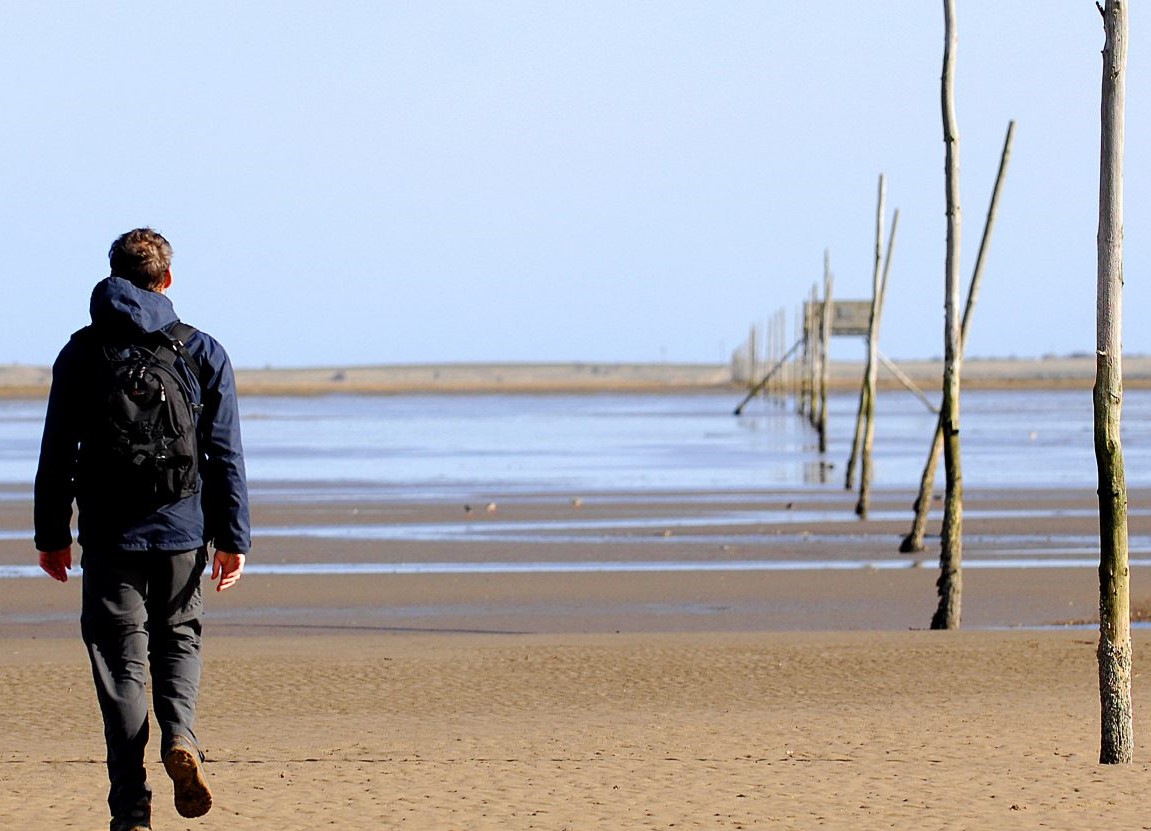
The final day of walking brings David to the Holy Island which walkers reach across the causeway at low tide by following the posts of the historic Pilgrims Path across the sands. David will then stay for the weekend on Holy Island, a place he has visited many times before as a pilgrim. The monastery of Lindisfarne was founded around 634 by Irish monk Saint Aidan, who had been sent from Iona off the west coast of Scotland to Northumbria at the request of King Oswald. The priory was founded before the end of 634 and Aidan remained there until his death in 651. Saint Cuthbert, was a monk and later abbot of the monastery, and his miracles and life are recorded by the Venerable Bede. Cuthbert later became Bishop of Lindisfarne. Also linked to Holy Island is the beautifully illuminated manuscript known as the Lindisfarne Gospels which dates back to the 8th Century.

We pray that this Pilgrimage will be a time of blessing and refreshment for David. Please pray for him throughout the journey and for all the Pilgrims he will meet along the way. You might like to join him in saying the Celtic Morning or Evening Prayer every day.